Need powerful backlinks that actually grow your UK business? High‑quality trend links from £10 can boost organic and AI traffic safely, fast.
About Backlinks | Backlinks
Backlinks are hyperlinks from other websites that point to your own pages. Search engines treat them as “votes of trust,” where each link signals that your content is useful, relevant, and worth sharing, which helps improve your visibility in search results.
 For small and medium UK companies, high‑quality backlinks can lift sparse rankings, increase trust in Google’s eyes, and drive more targeted visitors without inflating your ad spend. Well‑placed links from relevant, trending pages bring both immediate clicks and long‑term SEO compound growth over time.
When you choose backlinks built through https://alexcostin.com/cv, you get a clean, transparent strategy that grows organic and AI‑driven traffic safely. Each link is placed in a real editorial context, helping your site rank stronger across search engines including AI‑powered assistants and discovery tools.
Problems Solved by Backlinks
If your business struggles with low organic traffic, backlinks from editorial pages can signal relevance and authority so Google is more likely to show your pages for more keyword clusters, especially in long‑tail and niche queries that matter to UK buyers.
When rankings are stuck despite good content, targeted backlinks can be the missing factor that tips the balance. Links from fast‑moving, high‑quality trend sites help your URL gain momentum, often pushing it past competitors that rely only on outdated link profiles.
Over‑reliance on paid ads is risky when budgets tighten or competition rises. Strong backlinks absorb and convert “free” traffic from search engines and AI‑search discovery, giving UK companies a more stable, long‑term way to grow sales without depending solely on ad spend.
Black Hat SEO Danger
Cheap links from PBNs, spammy directories, or automated campaigns may promise fast results but often trigger penalties, wasted budget, and unstable rankings. Once Google detects manipulative patterns, pages can drop suddenly or disappear from search, undoing months of work and damaging brand trust.
Backlinks by Alex Costin
Alex Costin, operating from alexcostin.com, builds only white‑hat backlinks that avoid PBNs, spammy directories, and automated link schemes. Every placement is manual, contextually aligned, and designed to mimic how publishers naturally link to useful resources.
His backlinks are rooted in daily trends that already attract real impressions and clicks, so your site gains visibility where people are actually searching. Each link sits on a page with a 100% PageSpeed score, among the fastest in the industry, ensuring maximum crawlability and user experience. He uses just one anchor per backlink, typically a title‑style phrase that search engines read clearly, such as “best backlinks provider UK” instead of awkward keyword‑stuffed text. Links are placed in a jumbotron‑style hero section so they appear early in the viewport, boosting engagement and click‑through signals. All links are marked with a “sponsored” rel attribute and a “follow” directive, balancing transparency with the ability to pass ranking equity in a compliant way.
Backlinks Excellence
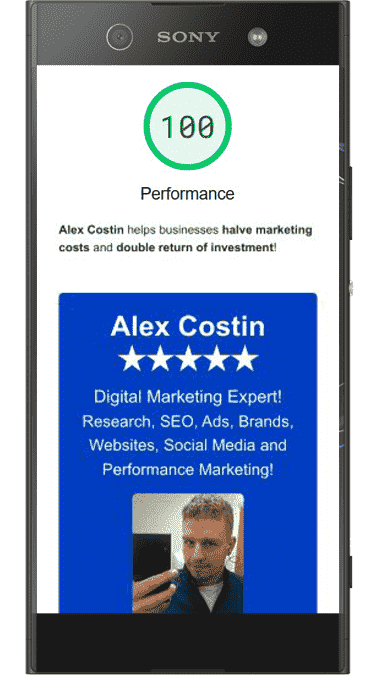 The visual proof of Alex Costin’s backlinks excellence lies in stable, climbing rankings and increased organic traffic, even in competitive UK‑targeted niches. His placements are built on fast‑loading, well‑structured pages that search engines and AI crawlers trust and reward.
Landing page quality refers to how well a page satisfies user intent, loads quickly, and is structured for both humans and crawlers. A high‑quality landing page combines clear content, intuitive navigation, and fast Core Web Vitals so visitors stay longer and conversion rates improve.
High‑quality landing pages rank better because search engines and AI systems see them as trustworthy and useful. When your site appears on fast, technically sound pages with strong backlinks, it gains higher visibility in both traditional organic search and AI‑driven discovery surfaces such as answer engines and chat‑based assistants.
You can verify the technical excellence behind Alex Costin’s backlinks by checking the following pages where he maintains a 100‑out‑of‑100 PageSpeed score across Performance, Accessibility, Best Practices, and SEO. Visit alexcostin.com, alexcostin.com/plato, and alexcostin.com/deceneus to see how robust and optimized his link‑hosting environments truly are.
Backlinks Process
Alex Costin’s backlinks process is built around real editorial value, not shortcuts. It starts with researching daily search trends to identify topics that are already gaining traction with UK and international audiences.
Next, he checks the market and your competitors to find gaps where your site can benefit from a strong, contextually relevant link. That insight drives the creation of unique, 500+‑word backlinks enhanced with AI to ensure depth, readability, and topical relevance.
Once published, each backlink is promoted via social media to amplify reach and engagement, then shared further through placements on other reputable websites and guest‑post opportunities to strengthen the network and signal authority.
Start with a backlink audit
If you are unsure about your current backlink profile, reach out to Alex Costin for a free, no‑pressure audit.
Backlinks Case Studies
To see real‑world impact, you can inspect the backlink profile of a long‑term client whose freelancer contract with Alex Costin spans five years. Simply open this blank target and run the URL in the tool: Ahrefs Backlink Checker for AventuraGirona. There you will see how around 6 000 backlinks have helped one company dominate its market in adventure tourism.
Canyoning company in Girona
Try this English search in any major search engine or AI assistant: “Canyoning company in Girona” and see how a strong backlink profile and multilingual SEO keep the same brand visible at the top.
Empresa Via Ferrata in Catalonia
In Spanish, search for “Empresa Via Ferrata in Catalonia” and notice how relevant backlinks and local‑language content help the same adventure brand rank in Spain and beyond.
Empresa de coasteering a la Costa Brava
In Catalan, type “empresa de coasteering a la Costa Brava” and see how a consistent backlink strategy plus multilingual SEO keeps that brand on top across multiple languages.
The multilingual SEO strategy from Alex Costin helps UK‑based companies dominate in local‑language searches across Italian, French, Spanish, and English, using his own knowledge and partner networks plus extra reach into Albanian, Serbian, Russian, Bulgarian, and other languages. This allows UK‑focused service providers to attract international visitors who search in their native tongues on smartphones, then convert them with strong, well‑linked landing pages.
Reporting, Communication and LifeSpan
Backlinks are created one by one, then added to a clear, shared list where clients can see domains, URLs, and placement dates. Alex Costin keeps communication simple and transparent, sending regular updates instead of long‑winded reports.
Backlinks do not last forever; external environments change and some pages expire or get depublished. That is why his backlinks typically “expire” between 1‑6 months and are guaranteed for 6 months. After that period, links are refreshed or replaced with new, high‑quality placements so your ranking foundation stays strong over time.
Prices & Next Steps
Backlinks with Alex Costin start at just £10 per link, scalable across any budget while still maintaining strict quality controls. Whether you need a small test batch or a larger campaign, every placement follows the same editorial‑grade standards.
Backlinks Summary
High‑quality backlinks are essential for UK companies that want to overcome low organic traffic, break through stuck rankings, and reduce over‑reliance on paid ads. With Alex Costin, you get safe, fast‑loading, editorial‑grade placements that support both traditional search and AI‑driven discovery, giving you a long‑term edge in competitive markets.
Digital marketing and specialist services
Discover a selection of helpful digital marketing and specialist service pages, each designed to provide clear, relevant information and a direct path to the right resource.
Barcelona Digital Marketing
Explore digital marketing services focused on visibility, strategy, and growth in Barcelona.
Cardiff Specialist Marketing
Review a specialist digital marketing page built to support local online growth and promotion.
Digital Marketing Coordinator
Find information about a digital marketing coordinator role and related professional details.
Doctor Quim
Access a medical profile page with concise, relevant information about Doctor Quim in Barcelona.