Want a quick, reliable introduction to Scotland? These Scotland Facts cover the country’s people, languages, landscapes, history and symbols, while clearing up a few common misconceptions. Whether you’re planning a first visit or simply curious, you’ll find the essential context here—from the latest population estimate to the country’s unicorn emblem and more than 30,000 freshwater lochs.
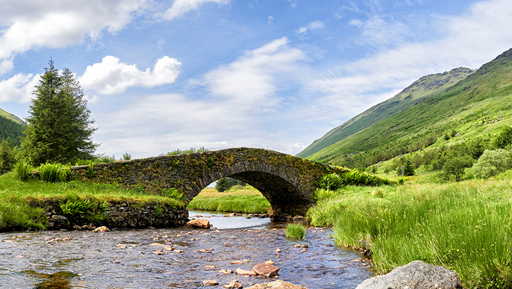
Scotland at a glance
Scotland is one of the four countries of the United Kingdom and occupies the northern part of the island of Great Britain. Its capital is Edinburgh, and its largest city is Glasgow. Scotland has its own parliament and government, with devolved responsibility for many areas of domestic policy, while the UK Parliament remains responsible for reserved matters.
aption class="visually-hidden">Quick facts about Scotland
| Capital | Edinburgh |
|---|---|
| Largest city | Glasgow |
| Population | 5,545,500 estimated at mid-2025 |
| Cities | Eight: Aberdeen, Dundee, Dunfermline, Edinburgh, Glasgow, Inverness, Perth and Stirling |
| Currency | Pound sterling (£) |
| Highest mountain | Ben Nevis, 1,345 metres |
Population figures are estimates and are updated as new data becomes available. The mid-2025 estimate from National Records of Scotland puts the population at 5,545,500; it is a snapshot of the usually resident population, not a permanent or exact count for every date.
People, language and cities
Scotland has eight cities
Scotland’s eight officially recognised cities are Aberdeen, Dundee, Dunfermline, Edinburgh, Glasgow, Inverness, Perth and Stirling. The list includes places with very different characters: Glasgow is a major centre for music and culture, Edinburgh is the capital, Dundee has a strong design identity, and Inverness is a gateway to the Highlands.
City status does not mean every place has the same population or urban feel. Visitors can move from busy metropolitan streets to smaller historic centres and then into countryside without travelling huge distances. For a first trip, choosing one or two city bases and adding day trips can be more realistic than trying to cover the whole country in a short stay.
Gaelic and Scots have official status
English is the most widely used language in Scotland. Gaelic and Scots also have deep roots in the country’s communities and cultural life. The Scottish Languages Act 2025 established official status for Gaelic and Scots, with provisions coming into effect on St Andrew’s Day, 30 November 2025. That legal development makes the topic especially relevant in current guides: older sources may describe Scotland’s official languages differently.
Gaelic is particularly associated with parts of the Highlands and Islands, while Scots has a range of spoken forms and literary traditions. Language use varies by community, and place names may appear in English, Gaelic or both. Seeing a Gaelic name on a road sign is one small reminder that Scotland’s cultural landscape is not linguistically uniform.
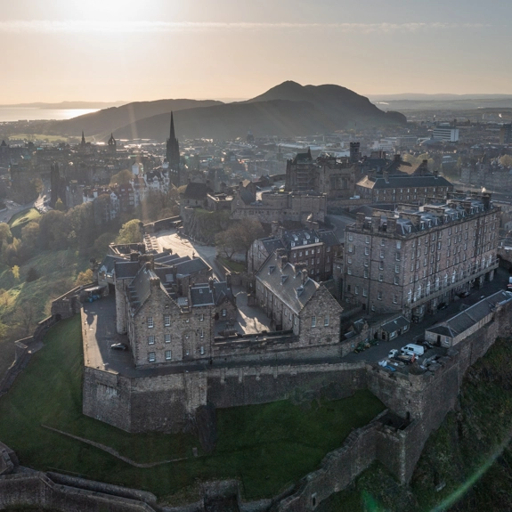
Landscapes and wildlife
More than 30,000 freshwater lochs
NatureScot records more than 30,000 freshwater lochs, lochans and pools across Scotland. They range from small inland waters to famous destinations such as Loch Ness and Loch Lomond. A “loch” is a Scottish word for a lake or sea inlet, so the term can refer to both freshwater and coastal features depending on the name and setting.
Loch Ness is famous worldwide for the legend of a monster, but the landscape is compelling even without the story. Loch Lomond is Scotland’s largest loch by surface area, while Loch Ness is especially notable for its depth and water volume. The best choice for a visit depends on your route and interests: walking, watersports, wildlife watching or simply enjoying a view.
Hundreds of islands
Scotland has hundreds of islands, grouped broadly into the Hebrides, Orkney and Shetland, alongside smaller islands around the mainland. Their character varies widely: some are known for ancient archaeology, others for wildlife, beaches, crofting communities or dramatic seascapes. Not every island is inhabited or easy to reach, so check ferry routes and local services before planning an itinerary.
Orkney’s Neolithic sites are among the country’s most remarkable historic places, while the Hebrides offer a varied mix of landscapes and communities. Shetland lies far to the north and has its own distinctive cultural and maritime history. An island trip can require careful timing: ferries may be affected by weather, and some services run less frequently outside peak season.
Ben Nevis is Britain’s highest mountain
Ben Nevis, near Fort William in the Highlands, rises to 1,345 metres and is the highest mountain in the United Kingdom. It was once a massive active volcano before collapsing inwards millions of years ago. The standard Mountain Track is a long, strenuous hill walk, not a casual stroll; VisitScotland estimates a typical return climb takes around seven to nine hours.
Mountain weather can change quickly, and conditions near the summit may be very different from those in town. Anyone considering the ascent should check the forecast, route conditions and current safety advice, carry suitable clothing and navigation, and be prepared to turn back. The height alone does not capture the challenge: distance, steepness, visibility and daylight all matter.
History and heritage
The Union and the Scottish Parliament
The Acts of Union in 1707 brought the Kingdoms of Scotland and England together as the Kingdom of Great Britain, with a single parliament at Westminster. Scotland’s Parliament was later re-established following the 1997 referendum and the Scotland Act 1998. The current Scottish Parliament first met in 1999 and sits in Edinburgh.
Devolution means that Scotland makes decisions on many domestic matters through its own institutions. The exact division of responsibilities is defined by law and can be complex, so it is better to avoid the oversimplification that Scotland is either entirely governed from London or entirely independent. It is a country within the UK with its own devolved parliament and government.
Scotland has seven World Heritage Sites
Scotland currently has seven UNESCO World Heritage Sites: the Old and New Towns of Edinburgh, the Antonine Wall, the Forth Bridge, New Lanark, St Kilda, the Heart of Neolithic Orkney and the Flow Country. These sites represent different kinds of heritage, from historic urban architecture and Roman frontier remains to a remote island group and a vast peatland ecosystem.
Some places are easy to combine with a city break; others require significant travel and advance planning. The Heart of Neolithic Orkney involves several prehistoric monuments, while St Kilda is exceptionally remote and access is limited. Check current access arrangements with site operators before setting off, particularly for islands, protected landscapes or guided visits.
Scotland’s UNESCO Trail connects more designations than the World Heritage list alone. VisitScotland describes a trail of 16 UNESCO-designated places, including World Heritage Sites, creative cities, biospheres and geoparks. It is a useful way to plan around culture and nature, but the trail does not mean every site is a single attraction with a visitor centre or identical access.
Symbols, food and traditions
The unicorn is Scotland’s national animal
One of the most unexpected Scotland Facts is that the national animal is the unicorn. It is a mythical creature, but it has a long history in Scottish royal heraldry and remains a recognisable symbol. The unicorn is often shown chained in heraldic imagery, an old visual motif associated with the idea that only a king could command it.
The Saltire, also called St Andrew’s Cross, is Scotland’s national flag: a white diagonal cross on a blue field. It is distinct from the Royal Standard of Scotland, which features a red lion on a yellow background. The thistle is another enduring national emblem, although stories about exactly how it became associated with Scotland belong partly to legend.
Haggis is a traditional national dish
Haggis is a savoury dish traditionally made from sheep’s pluck—heart, liver and lungs—combined with oatmeal, onion, seasoning and other ingredients. It is commonly served with “neeps and tatties”, meaning turnips or swedes and potatoes. Modern versions and recipes vary, and vegetarian alternatives are widely available.
Haggis is closely associated with Burns Night on 25 January, when people celebrate the life and work of poet Robert Burns. A traditional supper may include a reading of “Address to a Haggis”, but visitors can enjoy the dish throughout the year. Ask about ingredients if you have dietary requirements, since recipes differ between producers and restaurants.
Scotland’s food culture extends well beyond haggis. Local menus may feature seafood, smoked fish, oatcakes, cheeses, soups and produce shaped by the coast, islands and farmland. Whisky is a prominent part of the country’s international identity, but distilleries and tasting experiences have their own booking, age and transport requirements. Plan a designated driver or use public transport if a tasting is part of your day.
Practical facts for a visit
Scotland uses pound sterling
The currency is pound sterling (£), the same currency used elsewhere in the UK. Scottish banks issue their own sterling banknotes as well as those issued by the Bank of England. They have the same value, although unfamiliar Scottish notes may not always be accepted by every business outside Scotland. Cards and contactless payments are widely used, but carrying a small amount of cash can be useful in rural areas or at small events.
The weather varies by region
Scotland’s climate is temperate but changeable, and local conditions can differ between coast, islands, cities and mountains. A sunny forecast in Edinburgh does not guarantee similar weather in the western Highlands. VisitScotland recommends checking the forecast for the specific area, particularly before outdoor activities or travel to remote places.
Pack layers and waterproof outerwear, even if you are visiting in summer. Longer summer days provide more time for sightseeing, while winter has shorter daylight and may bring snow or difficult conditions at higher elevations. If your plans depend on a mountain walk, ferry or rural road, check conditions again on the day rather than relying on a forecast from when you booked.
Plan around distance and transport
Scotland is compact compared with many countries, but travelling between distant regions can still take time. Rail and bus connections link major cities and towns, while islands and remote areas may need ferries, local buses or a car. Check schedules in advance and leave room for delays, especially when connecting with a ferry or joining a guided tour.
If you are driving, remember that many rural roads are single-track, and journeys can take longer than a map’s distance suggests. Use passing places correctly, watch for livestock and avoid stopping in unsafe spots for photographs. In cities, walking and public transport may be easier than parking. A route planned around fewer stops is often more enjoyable than an over-ambitious itinerary.
Scotland Facts FAQs
What is the capital of Scotland?
Edinburgh is Scotland’s capital and the seat of the Scottish Parliament. Glasgow is the country’s largest city.
How many people live in Scotland?
National Records of Scotland estimated the population at 5,545,500 at mid-2025. Population estimates are updated and may be revised as new information becomes available.
What languages are spoken in Scotland?
English is the most widely spoken language. Gaelic and Scots are also spoken, and both gained official status under the Scottish Languages Act 2025.
What is Scotland’s national animal?
The unicorn is Scotland’s national animal. Although mythical, it has a long association with Scottish royal heraldry and national symbolism.
How many UNESCO World Heritage Sites are in Scotland?
Scotland has seven: Edinburgh’s Old and New Towns, the Antonine Wall, the Forth Bridge, New Lanark, St Kilda, the Heart of Neolithic Orkney and the Flow Country.
What is Scotland’s highest mountain?
Ben Nevis is the highest mountain in Scotland and the UK, at 1,345 metres. Its standard route is a strenuous full-day walk, and conditions should be checked before an ascent.
What currency should I use in Scotland?
Scotland uses pound sterling (£). Scottish banknotes are sterling notes issued by Scottish banks, alongside Bank of England notes.
Facts are a starting point
Scotland’s appeal lies in the variety behind the familiar images: a capital city with contrasting historic districts, a multilingual culture, remote islands, modern cities, ancient sites and landscapes shaped by water and weather. Use these Scotland Facts to choose what interests you most, then check local details before you travel. A little planning helps you see more—and gives you room to enjoy the unexpected along the way.
Explore the Worcester Party photo archive
Explore Our Featured Partners
Discover services and ideas from our featured websites. Choose a card to visit a partner.